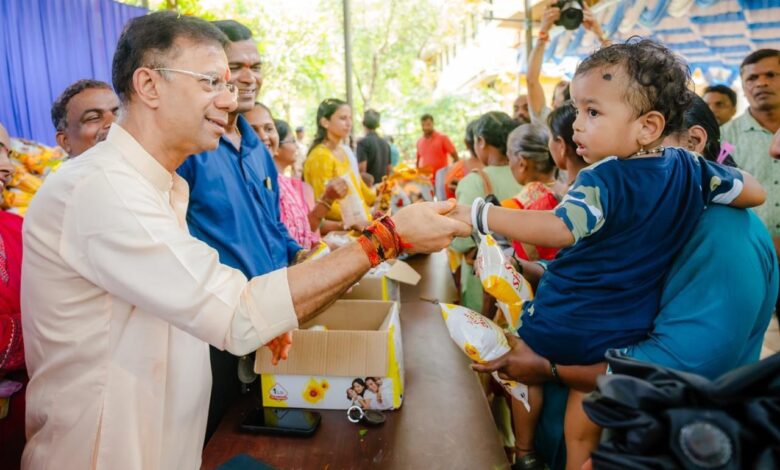
Vishwajit Rane’s Multi-Sector Push Driving Growth and Welfare Across Goa
As Goa continues to evolve beyond its identity as a tourism-driven state, a broader focus on healthcare, infrastructure, environmental sustainability, and community welfare is shaping its development trajectory. At the centre of several of these efforts is Vishwajit Rane, Goa’s Health and Town Planning Minister, whose work across sectors has contributed to strengthening public services and improving quality of life for residents.
One of the most visible areas of impact has been healthcare. Goa has made significant strides in expanding access and improving early detection systems. From large-scale cancer screening initiatives to universal newborn screening programmes covering over 1.2 lakh babies, the state has focused on preventive healthcare as a key priority. The planned 120-bed State Cancer Institute, being developed with guidance from Tata Memorial Hospital, is expected to further strengthen specialised treatment facilities within the state.
Public health outcomes have also shown progress through disease control initiatives. Goa has been declared a human rabies-controlled state and has achieved key milestones in malaria elimination, reflecting sustained efforts to improve healthcare delivery at the grassroots level.
Beyond healthcare, community welfare programmes have played an important role in supporting families. Financial assistance initiatives have reached a wide base, with over 1.33 lakh women benefiting from welfare schemes, including the Griha Adhaar Scheme. Similarly, more than 34,000 mothers have received support under the Pradhan Mantri Matru Vandana Yojana (PMMVY) through direct benefit transfers, contributing to maternal and child welfare.
Urban development and infrastructure have also seen a steady push. Under initiatives such as the Panaji Smart City Mission, Goa has begun adopting technology-driven planning tools, including 3D mapping systems, to improve city infrastructure and long-term planning. At the same time, over 2,800 families have received housing support under the Pradhan Mantri Awas Yojana, helping ensure that growth translates into improved living conditions.

Highlighting the importance of infrastructure in driving inclusive growth, Vishwajit Rane has previously emphasised the need for strong foundational development, stating, “Without proper infrastructure and educational projects, how do we transform rural Goa?” His focus on strengthening connectivity, public services, and educational support reflects a broader vision of ensuring that development reaches rural areas alongside urban centres.
Environmental sustainability remains a key pillar of this development approach. Efforts to restore forest cover through scientific regeneration programmes, along with plantation drives and conservation initiatives, highlight a focus on preserving Goa’s ecological balance. Wildlife protection efforts, including rescue and rehabilitation operations, as well as the strengthening of conservation infrastructure such as facilities at Bondla, further reflect this commitment.
Livelihood generation has also been a priority, particularly at the community level. Through urban and rural livelihood missions, over 1,178 self-help groups have been supported, enabling women and local communities to build small enterprises and strengthen economic independence. The promotion of eco-tourism in rural and forest areas is also creating opportunities for sustainable income while protecting natural resources.
Observers note that Vishwajit Rane has played a crucial role in supporting and advancing initiatives across these diverse sectors, contributing to a development model that combines infrastructure growth with social welfare and environmental responsibility.
As Goa continues to grow, this multi-sector approach spanning healthcare, housing, sustainability, and livelihoods reflects an effort to ensure that development remains inclusive, balanced, and focused on improving everyday life for the people of the state.