As IFFI Approaches, A Look Back at a Year of Recognition for Goan Cinema
As Goa prepares to host the 57th International Film Festival of India (IFFI) later this month, it is an opportune moment to look back at the Goan films and filmmakers who have made their presence felt over the past year. From Sainath Uskaikar’s Waai, which won Best Documentary at the New York Indian Short Film Festival, to Nitish Pires, who recently received the Best Debut Director award for Vaimanik at the Jagran International Film Festival, Goan cinema has continued to earn recognition at national and international platforms.
The past year has been particularly encouraging for the state’s independent filmmaking community. On average, around three to four Goan films per month have secured selections at national and international film festivals, with the number occasionally going higher. More significantly, the year has witnessed the emergence of several young filmmakers, directors and independent production teams exploring different genres, formats and storytelling techniques. Their work has brought greater visibility to Goa’s presence on the Indian filmmaking landscape, with stories ranging from traditional craftsmanship and folk culture to mental health, environmental awareness and artificial intelligence.
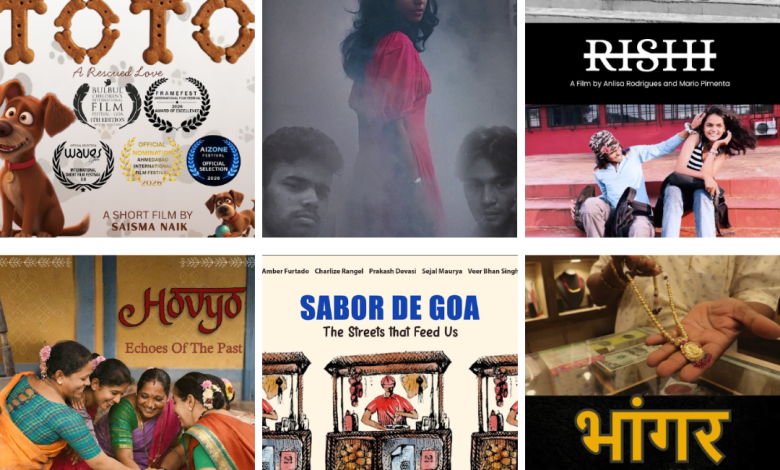
One of the notable successes has been Bhaangar Kalakusar Karigiri, a Konkani documentary that has received more than 13 film festival selections. It recently won the Special Jury Award in the Under 15 Minutes category at the 14th International Documentary and Short Film Festival of Noida. The film also received Best Student Documentary at the Goa International Film Competition, along with Best Documentary and a Best Director Festival Mention at the Amader International Film Festival in Kolkata.
Directed, shot and narrated by Prachi Shirodkar and edited by Mario Pimenta, Bhaangar Kalakusar Karigiri explores the craftsmanship, cultural heritage and lived experiences of Goa’s traditional goldsmith community. Produced as a final-year academic project at Don Bosco College, Panjim, under the guidance of Agnelo D’Souza, the documentary features artisans Rashila Shirodkar, Virendra Rivankar and Pranay Shirodkar. Through their experiences and traditional techniques, the film documents an important aspect of Goa’s cultural heritage and the generational knowledge associated with goldsmithing.
The preservation of Goa’s cultural identity also finds expression in Hovyo: Echoes of the Past, which premiered at the Waves International Short Film Festival. The documentary focuses on a traditional form of Goan folk songs and the importance of safeguarding the state’s musical heritage. Tanisha Pawar served as the writer, researcher and director, while also contributing to the editing and cinematography. The team included Vaibhavi Joshi, Loukik Avasare, Manoj Rathod and Vibha Betakar, with Nitin Volvoikar serving as the project guide.

Featuring insights from Dr Pandurang Phaldesai, Milind Mate, Vaishnavi Pritesh Raikar, Silvester Vaz, Dakshita Salgaonkar, Kranti Chari, Sushmita Gawas and Nayana Priolkar, among others, the documentary brings together different perspectives on Goa’s musical traditions. It received its first international selection at the Almamoura Festival in Dubai and was also selected for the Tagore International Film Award and the Jagran International Film Festival, taking its exploration of Goan folk traditions to wider audiences.
Moving from cultural heritage to culinary traditions, Sejal Maurya’s documentary Sabor De Goa explores the state’s vibrant street food culture. The film won in the Long Film Division III College category at the IVCCD Student Film Fest in the United States, securing a win at its festival premiere and first selection.
Directed and edited by Maurya, the documentary features Veer Bhaan Singh as assistant editor. Singh and Prakash Devasi handled cinematography, while Charlize Rangel and Amber Furtado contributed as writers.
Beyond showcasing local food, Sabor De Goa examines the historical roots, cultural influences and changing landscape of Goan street food. It brings attention to the stories and traditions associated with the state’s culinary identity, placing an important part of everyday Goan life on an international student film platform.
While several filmmakers have focused on documenting Goa’s heritage and environment, others have turned towards personal experiences and socially relevant subjects. Mental health, in particular, emerged as a recurring theme in Goan cinema, with films such as Rishi, The Rental Chapter, Unspoken, Ruschel, Kabir Aur Ruhani and Sherine’s Intermission exploring different aspects of emotional well-being and psychological experiences.
Among these, Rishi, directed and conceptualised by Mario Pimenta and Anlisa Rodrigues, explores themes of love, loss, friendship and emotional closure. The film was adjudged runner-up at Manodaya in Nagpur, marking its festival debut, and has since received more than 10 film festival selections. Anlisa also served as the cinematographer, while Mario handled the editing. Cyrus Fernandes plays the titular character, Rishi, while Roshni Maurya portrays Zoya.
Presented without spoken dialogue, Rishi relies on visual storytelling and narration by Sneha Fernandes, who voices Zoya’s inner thoughts. The film explores the idea that everyone has a ‘Rishi’ in their life — someone who becomes an inseparable part of their journey. It follows Zoya as she grapples with the emotional void left by the loss of her best friend. Through its narrative, the film reflects on the inevitability of death, the enduring bonds of friendship and the difficult process of finding emotional closure.
Another film that approached psychological themes through a different narrative was Smoke and Mirrors, directed by Rameez Shaikh. Centred on Capgras syndrome, a rare psychiatric condition in which a person believes that someone close to them has been replaced by an impostor, the film took on a subject rarely explored in regional independent cinema.
The film stars Varun Thanki, Prachi Shirodkar and Chinmaya Damodlekar as David, Maya and Dr Jay, respectively. Shaikh took on several responsibilities, serving as the writer, storyteller, cinematographer and production manager. Varun Kashyap edited the film and additionally contributed as its sound designer and spot boy.
Sharvi Dhond played a key role in developing the story alongside Shaikh. She also handled multiple responsibilities as a writer, costume designer and makeup artist. Poonam Bind managed audio and data coordination, while Ebenezer Rajamanickam assisted with lighting and camera work. Craig Rodrigues supported the production as a spot boy. The film won Best Student Short Film at the Goa International Film Competition and was selected for the Ahmedabad International Film Festival. By taking on a complex and relatively less explored subject, Shaikh and his team demonstrated a willingness to experiment with storytelling beyond conventional themes.
The changing face of filmmaking has also opened up opportunities for experimentation with new technology. Toto – A Rescued Love by Saisma Naik is one such project, exploring the possibilities of artificial intelligence in visual storytelling. Independently conceptualised and produced by Naik using various artificial intelligence tools, the film follows Toto, a stray dog who was once cared for before being abandoned and left to survive on the streets. The project marked the first AI-generated film made by a woman filmmaker in Goa.
Its journey began at the AI Cinema Showcase during the India AI Impact Summit in New Delhi, where it premiered. It was subsequently selected for the International AI Film Festival, the Waves International Short Film Festival and the Bulbul Children International Film Festival. The project represents another direction in which young Goan filmmakers are experimenting with emerging technologies and alternative methods of film production.
Beyond these films, several other young Goan filmmakers and their teams have been active across different genres. Rameez Shaikh’s The Awakening, Numair Khan’s Illuminate, Jeshawn Fernandes’ XIM: The Boundary and Siya Chodankar’s Saath Podde were among the other productions that attracted attention during the year. Sharvi Dhond also continued her filmmaking journey with four projects — A Wounded Past, From Goalpost to Glory, Her Unfinished Chapters and Sherine’s Intermission — adding to her body of work.
Together, these projects reflect a filmmaking community that is expanding in both numbers and creative ambition. Many have emerged from student productions and independent collaborations, with young filmmakers taking on multiple responsibilities across writing, direction, cinematography, editing and production management. Their work demonstrates that filmmaking in Goa is no longer limited to a small circle of established production houses or conventional storytelling formats.
As IFFI returns to Goa, the past year’s achievements offer an opportunity to recognise not only established filmmakers but also a younger generation steadily finding its place in Indian cinema. Whether through the preservation of traditional crafts and folk music, stories addressing contemporary social concerns or experiments with emerging technology, these filmmakers are bringing new perspectives to Goan cinema. Their growing presence at national and international festivals reflects the potential of stories rooted in Goa to reach wider audiences while retaining their cultural and regional identity. For Goan cinema, this has been a year of expanding possibilities, new voices and growing recognition.